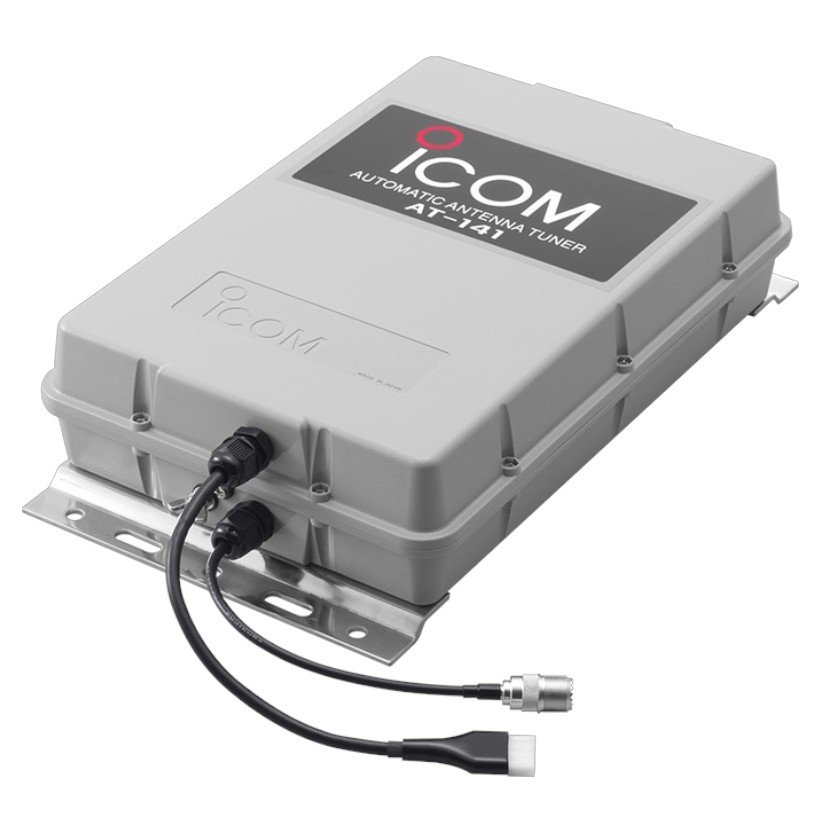
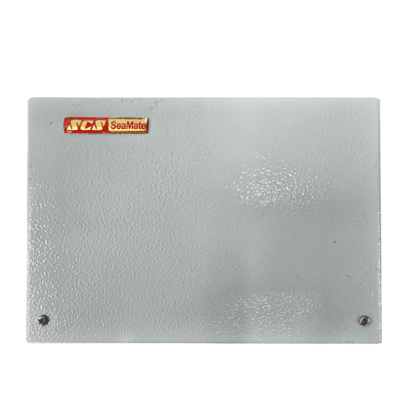
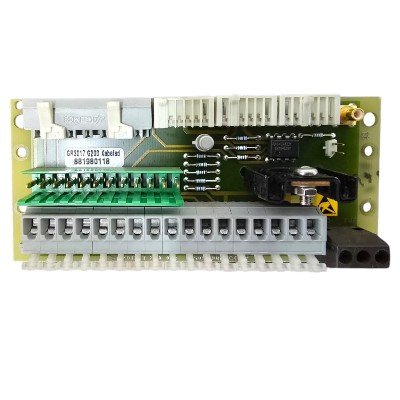
The Samyung SAT-100 Automatic High Frequency Marine Antenna Tuner Unit (ATU) is a critical component in a vessel’s MF/HF (Medium Frequency/High Frequency) radio communication system. Its primary purpose is to ensure efficient power transfer between the radio transceiver and the antenna, which is vital for clear and reliable long-range voice and data communication at sea.
Technical Specification
General:
- Product Type: Automatic Antenna Tuning Unit (ATU) / Antenna Coupler
- Compatibility: Designed for use with Samyung MF/HF Transceivers (e.g., SRG-150DN, SRG-250DN, SRG-1150DN, SRG-1250DN, SRG-3150DN, SRG-3250DN series).
- Function: Automatic impedance matching between MF/HF transceiver and antenna to achieve optimal SWR.
- Control: Remotely controlled and powered by the connected Samyung MF/HF transceiver.
Electrical:
- Frequency Range: 1.6 MHz to 27.5 MHz (covering all marine MF/HF bands).
- Input Impedance: 50 Ohms (from the transceiver).
- Output Impedance: Tuned to match the specific characteristics of the marine whip antenna.
- Power Handling Capacity (PEP):
- Typically 150W PEP (for models paired with 150W transceivers like SRG-1150DN).
- May also support up to 250W PEP (for models paired with 250W transceivers like SRG-1250DN).
- Power Supply: 24 VDC (sourced directly from the MF/HF transceiver or a dedicated power supply unit).
- Current Consumption: Relatively low, primarily when tuning (specific value not commonly published for ATUs, but generally under 1A).
- Tuning Time: Typically very fast, often within 1 to 15 seconds, depending on the frequency band change and initial mismatch.
Physical & Environmental:
- Mounting Location: Designed for outdoor installation, typically near the base of the whip antenna to minimize coaxial cable loss between the tuner and antenna.
- Dimensions: (Approximate, as exact dimensions can vary slightly between revisions and specific models)
- Length: ~380-450 mm
- Width: ~238-327 mm
- Depth: ~285-380 mm
- Note: Some sources indicate dimensions around 300(W) x 255(H) x 125(D) mm, or 450x380x285mm, so it’s important to verify with an exact datasheet if precise measurements are critical.
- Weight: Approximately 5 kg (or similar, depending on internal components).
- Construction: Robust, marine-grade, weatherproof aluminum or durable plastic enclosure.
- Ingress Protection (IP) Rating: Likely IP66 or IP67, indicating high resistance to dust and powerful jets of water/temporary immersion, suitable for exposed marine environments.
- Operating Temperature: -15°C to +55°C (standard for marine electronics).
- Storage Temperature: -25°C to +70°C (standard for marine electronics).
- Vibration: Compliant with IEC 60945 (marine navigational equipment – general requirements).
- Grounding: Requires proper grounding to the vessel’s hull for optimal performance and safety.
Features:
- Automatic Tuning: Utilizes internal relays and matching components to automatically achieve a low SWR.
- Overload Protection: Designed to protect itself and the connected transceiver from high SWR conditions.
- Self-Test Function: May include self-diagnostic capabilities.
Compliance:
- Often complies with ITU, IMO, and GMDSS (Global Maritime Distress and Safety System) requirements when part of a compliant MF/HF system.
- IEC 60945 (General requirements for marine navigational equipment).







There are no reviews yet.