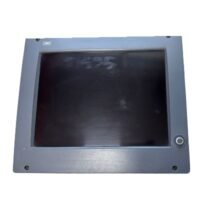
The RUTTER RUT-01007 Operating and Alarm Unit (OAU) is the user interface and control panel for Rutter VDR/S-VDR systems. It provides visual and audible alarms in case of system failures or critical events, ensures real-time operational status display, and allows the mariner to perform essential VDR functions such as emergency data backup and data download (e.g., to a USB drive). It serves as the primary point of interaction for monitoring and managing the VDR’s recording capabilities.
Technical Specification
1. General Specifications:
- Model Name: RUT-01007 (also sometimes referred to as RT-2150 in earlier or equivalent contexts)
- Purpose: User Interface, Alarm Annunciator, and Control Panel for Rutter VDR/S-VDR systems.
- Compatibility: Rutter VDR-100G2/G2S, VDR-100G3/G3S.
- Manufacturer: Rutter Technologies Inc. (Canada)
2. Display & User Interface:
- Display Type: LCD display (typically monochrome or basic color, designed for clarity in various lighting conditions).
- Indicators: Multiple LED indicators for system status (e.g., Recording, Alarm, Power, Malfunction, Data Download).
- Controls:
- Push buttons/keys for various functions:
- Emergency data save/secure (often a dedicated “Secure Data” or “Save” button)
- Alarm silence/Acknowledge
- Test functions
- Menu navigation (up/down, enter, escape)
- Brightness/dimming control.
- Dedicated USB port for data download (e.g., to a USB flash drive).
- Audible Alarm: Integrated buzzer or speaker for audible alarm annunciation.
3. Electrical Specifications:
- Power Supply: Typically powered directly from the VDR’s Data Processing Unit (DPU) or Data Management Module (DMM) via a dedicated cable. It does not usually require a separate power supply.
- Voltage: Likely 12 VDC or 24 VDC, derived from the main VDR unit.
- Power Consumption: Low power consumption, typically a few watts.
- Connection to VDR: Connects to the main VDR unit (DPU/DMM) via a single Ethernet cable (or proprietary data/power cable for earlier models) using Rutter’s distributed architecture. This cable carries both data and power.
4. Data Handling:
- Data Displayed: Real-time VDR status, system alarms (e.g., sensor failure, recording error), log information, current time/date, data download status.
- Data Download: Facilitates download of recorded VDR data (e.g., last 12 hours, secured data sets) to an external USB memory stick.
5. Physical & Environmental Specifications:
- Mounting: Designed for either flush mounting into a bridge console or bulkhead mounting using a bracket.
- Enclosure Material: Robust marine-grade plastic or metal.
- Dimensions: Compact, designed for bridge console integration. Exact dimensions would be in the VDR system’s installation manual (e.g., typically around 150-200mm wide, 100-150mm high, 50-70mm deep).
- Weight: Lightweight, typically under 1 kg.
- Operating Temperature: -15°C to +55°C (standard for bridge equipment).
- Storage Temperature: -25°C to +70°C.
- Humidity: Up to 95% non-condensing.
- IP Rating: Typically IP22 (front panel if flush mounted, protecting against vertically dripping water and solid objects), or IP20 for the enclosure if not flush mounted.
- Compass Safe Distance: Typically specified in the VDR system manual.
6. Compliance:
- IMO Performance Standards: As part of a VDR/S-VDR system, it aids in compliance with IMO Resolution A.861(20) and subsequent amendments like MSC.333(90) for VDRs.
- IEC Standards: Complies with relevant sections of IEC 60945 (Maritime navigation and radiocommunication equipment and systems – General requirements) and IEC 61996 (VDR performance standards).







There are no reviews yet.